Stranded on the Highway? Here is Exactly What to Do to Stay Safe
Breaking down on a busy highway is a high-stress situation. Whether it is a blown tire, an overheated engine, or sudden mechanical failure, the speed of nearby traffic presents an immediate danger.
If you find yourself stranded, staying calm and making the right decisions can prevent a minor inconvenience from turning into a major accident. Here is a step-by-step safety guide for drivers and passengers to ensure everyone stays safe while waiting for help.
1. Get Your Vehicle to the Safest Possible Spot
At the first sign of trouble, do not panic. Your primary goal is to get your vehicle out of the flow of traffic.
- Signal and steer to the right: The right shoulder is almost always safer than the left shoulder or center median.
- Avoid curves and hills: Try to coast to a straight stretch of road. Stopping just over a hill or around a blind curve makes it incredibly difficult for oncoming traffic to see you.
- Point your wheels away from the road: Once parked, turn your steering wheel to the right. If another vehicle rear-ends your car, this prevents it from being pushed back into active traffic lanes.
- Engage the emergency brake: This adds an extra layer of security to keep your vehicle stationary.
2. Maximize Your Visibility
You need to make sure your vehicle is as visible as possible to other drivers, especially at night or during poor weather conditions.
- Turn on your hazard lights: Activate your emergency flashers immediately. Leave them on for the duration of the breakdown.
- Pop the hood: Raising your hood is the universal sign of a disabled vehicle. It signals to passing drivers—and highway patrol—that you need assistance.
- Use emergency markers: If you have road flares or reflective triangles in your emergency kit, place them behind your vehicle. Place the first one about 10 feet behind the car, and the second one about 100 feet further back to give fast-moving drivers plenty of warning.
3. Make the Safe Choice: Stay Inside or Exit?
One of the most critical decisions you will make is whether to stay inside the vehicle or step outside. This depends entirely on your immediate surroundings.
When to Stay Inside the Car
If the highway has no guardrail, a very narrow shoulder, or if traffic is moving at high speeds close to your vehicle, it is generally safest to stay inside. Keep your seatbelts fastened, lock the doors, and remain alert.
When to Exit the Car
If there is a safe area nearby—such as a grassy embankment or a sturdy guardrail—it may be safer to exit. However, you must follow these strict rules:
- Never exit on the driver’s side: Everyone must exit through the passenger side doors, away from active traffic lanes.
- Never stand directly in front of or behind the vehicle: If your car is struck by another vehicle, you do not want to be crushed between them.
- Stay behind the barrier: Stand well back from the shoulder, preferably behind a guardrail or up on a hill.
4. Call for Emergency Towing
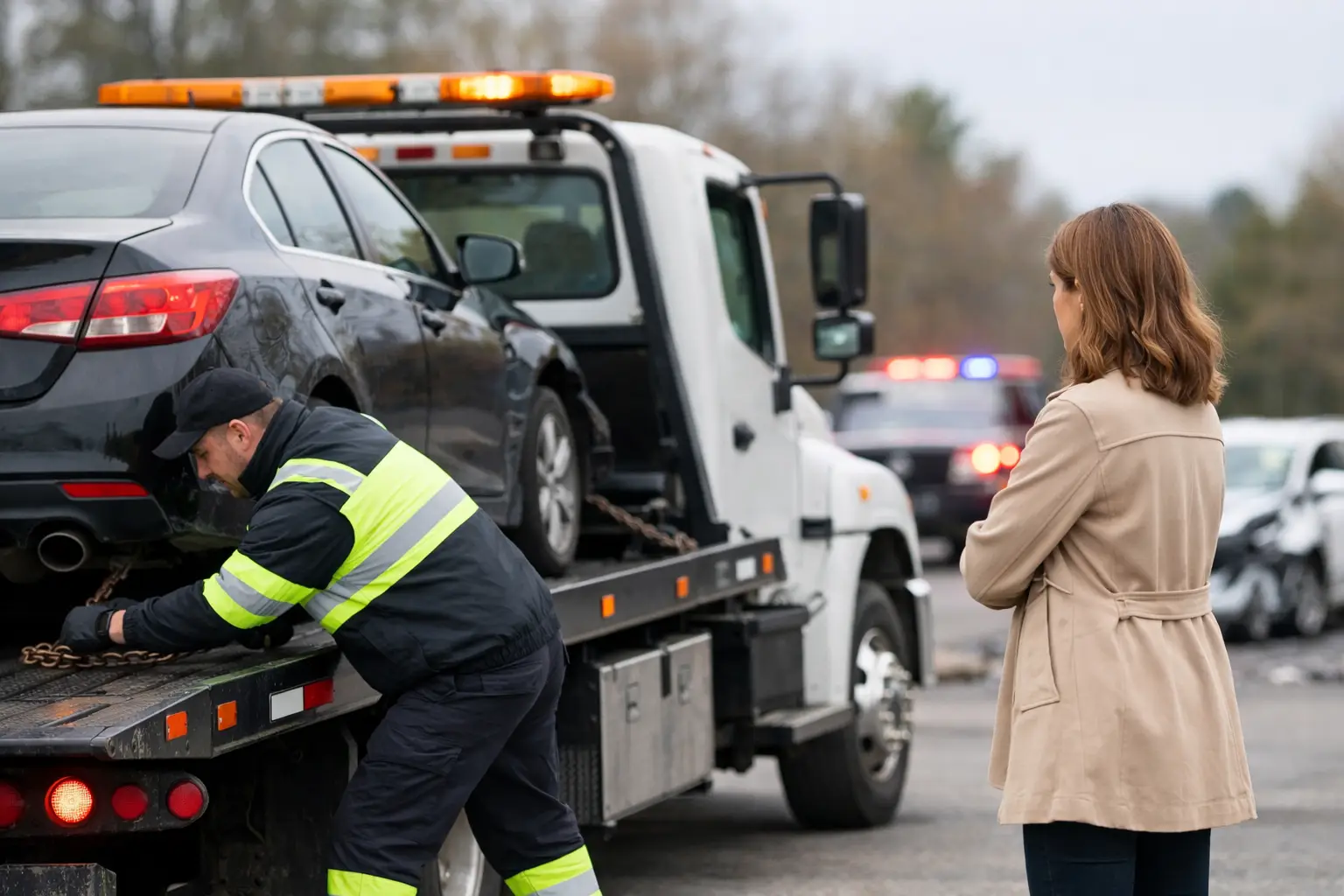
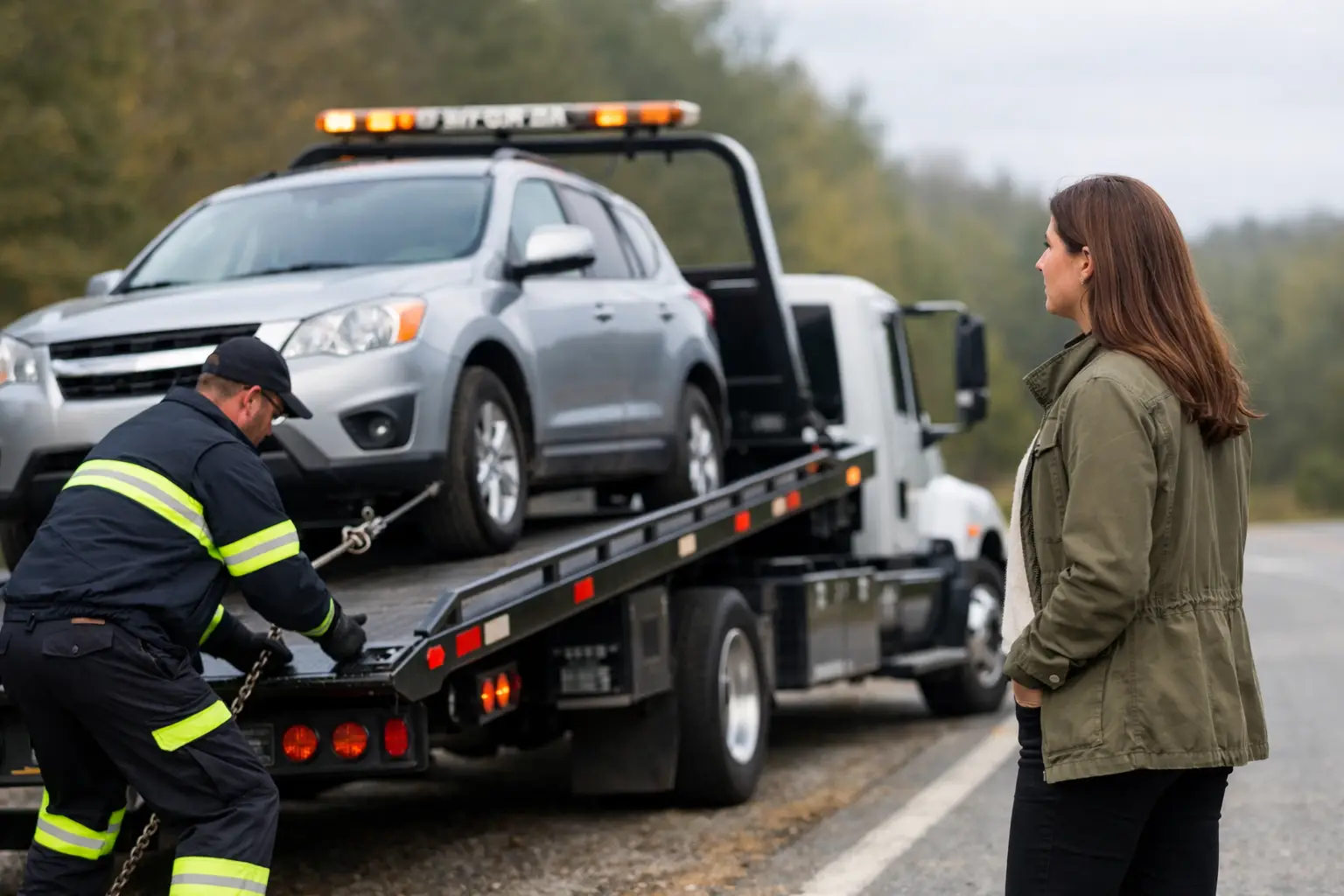
Once you and your passengers are in a secure position, it is time to call for professional help.
If you are in immediate danger—such as being stuck in a live lane of traffic—call 911 first. The operator can dispatch highway patrol to block traffic and secure the scene.
If you are safely on the shoulder, call for emergency towing services. When you contact the dispatch operator, be prepared to provide:
- Your exact location (mile markers, nearest exits, or GPS coordinates from your smartphone).
- A description of your vehicle (make, model, color, and license plate).
- The nature of the breakdown.
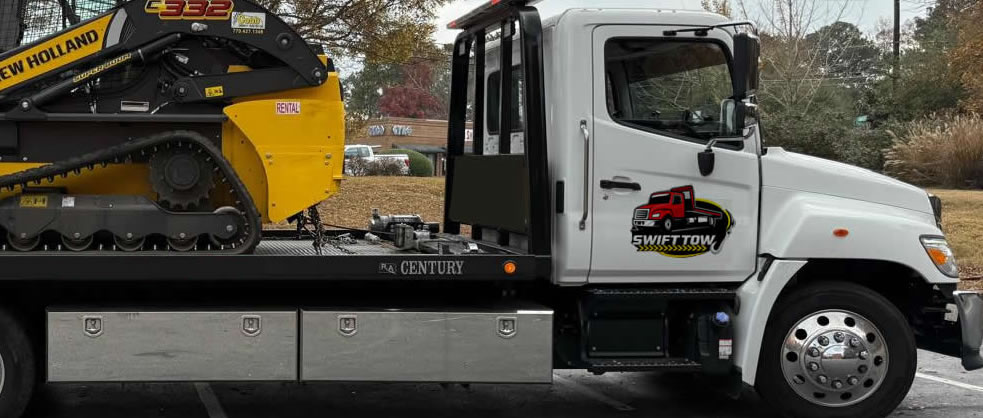
Depending on your vehicle type, you may need to request a specific type of tow truck. For example, all-wheel-drive vehicles, low-clearance cars, and vehicles with severe drivetrain damage usually require flat bed towing to prevent further mechanical damage during transport.
5. Keep Passengers Calm and Secure
If you have passengers, especially children or pets, your leadership is crucial. Keep everyone calm and ensure they understand the importance of staying put.
Never let children wander near the road, and keep pets securely on a leash or inside their carriers. While waiting for the tow truck to arrive, keep your phone lines free so the driver or emergency services can contact you with updates.